
Built to Last 25 Years: The Shock Coupling Difference
Shock loads and alignment issues from log handling destroy drive systems and gearboxes. Our proprietary urethane-peg insert couplings are engineered to take that abuse — protecting the drive system and reducer.
If you've replaced a gearbox on a log-handling line more than once in a three-year window, the coupling is almost certainly the reason—or the absence of a proper one.
Here's the physics, the failure mode, and why FiberPro built a better solution.
What a Shock Coupling Does
A log-handling drivetrain does exactly what the name says: it handles logs. Logs drop onto conveyors, slam into stops, pile up against each other, and get sorted at speed. Every one of those events sends a shock load back through the mechanical system—a brief, high-magnitude torque spike that can be 20–30x the steady-state operating torque.
A shock coupling sits in the drivetrain between the drive and the driven load. Its job is to absorb that spike before it reaches the gearbox and motor. Done right, the coupling deflects under the impact, stores the energy briefly as elastic deformation, and releases it gradually. The gearbox does not see the shock loading. The motor sees a smoothed load. Neither experiences the raw impact.
Done wrong—or with no coupling at all—the spike goes straight into the bearings, the gear teeth, and the shaft keys. Cast iron and hardened steel don't absorb energy well. They crack. They spall. They fail.
The Competitor Failure Mode
Most commodity couplings in the market use rubber elements or elastomeric inserts that are sized for standard industrial service—not for the impact profile of log handling. They work fine on pumps and conveyors that run at steady load. On a log-handling line, they're consumed quickly.
A rubber insert that's appropriate for a 50 HP pump application has a finite fatigue life under repeated shock loading. On a busy hardwood line, "finite" means months. The coupling fails, the operator replaces it, and the cycle repeats. Eventually an insert fails at the wrong moment and the shock goes directly into the gearbox—which wasn't designed to absorb it.
At that point, you're not replacing a $1,000 set of coupling inserts. You're replacing a $45,000 gearbox.
FiberPro's Proprietary Urethane-Insert Couplings
Our couplings use proprietary urethane formulations selected specifically for the impact energy profile of log-handling drivetrains. The material differences matter:
- Higher resilience. Urethane recovers its shape faster after deformation than conventional rubber, which means it absorbs successive shocks without heat-building fatigue accumulation.
- Controlled durometer. We specify the hardness of each insert for the torque range and impact frequency of the specific application—not a one-size-fits-most selection.
- Load-rated geometry. The insert geometry is machined to distribute shear load evenly across the contact surface, eliminating the localized stress concentrations that cause premature failure in commodity designs.
The result: our couplings are rated for 25 years of service life in log-handling service, with inserts lasting from 12 to 24 months. That's not a marketing figure—it's based on field data from installations we can point to.
What This Means for Your Maintenance Budget
Run the math on your own line. The cost difference between our system and a commodity solution is significant—often enough to pay for the entire unit assembly.
For drivetrain questions or to review how our coupling specification process works: info@fiberprollc.com or (501) 463-9876.
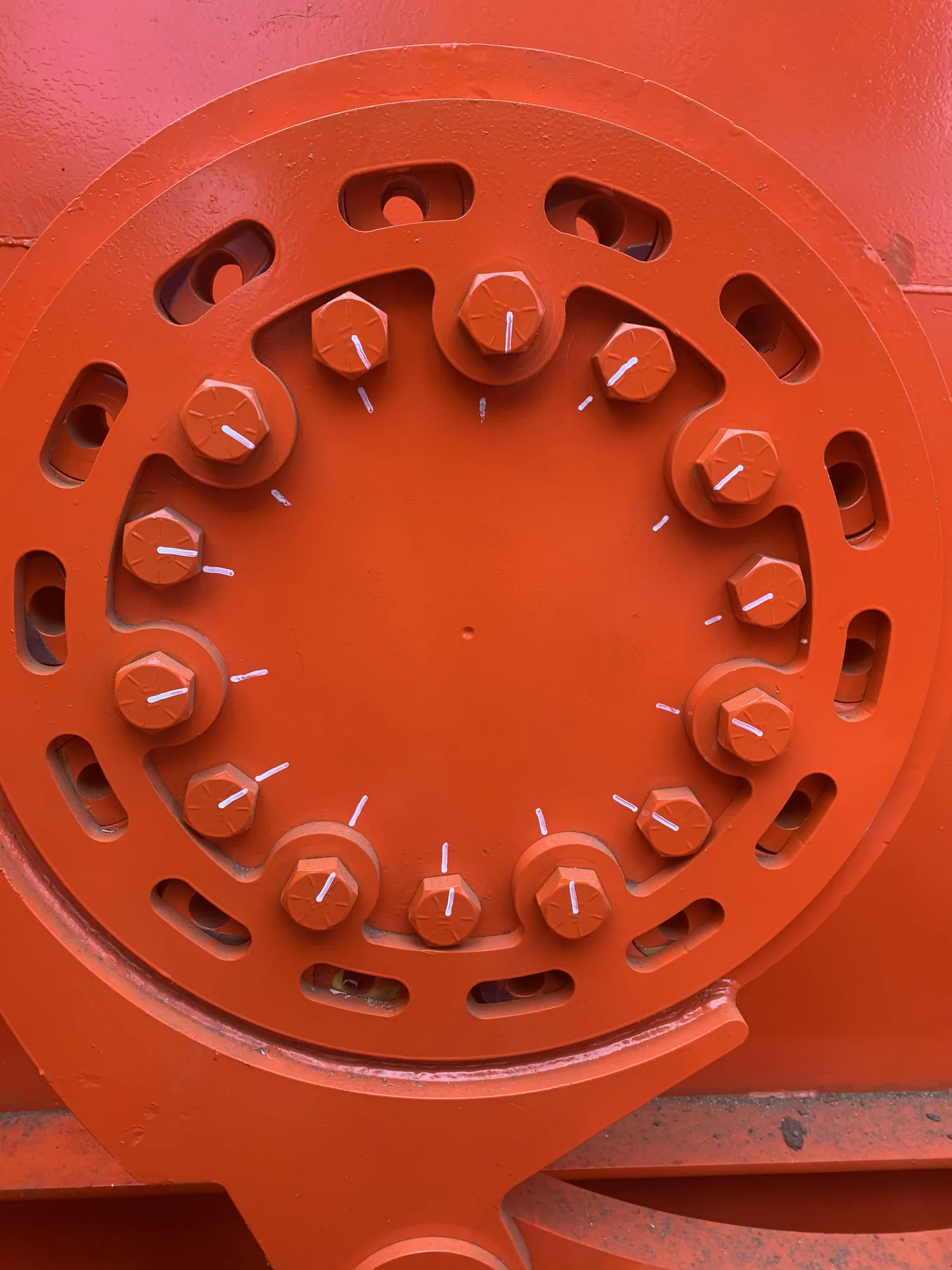
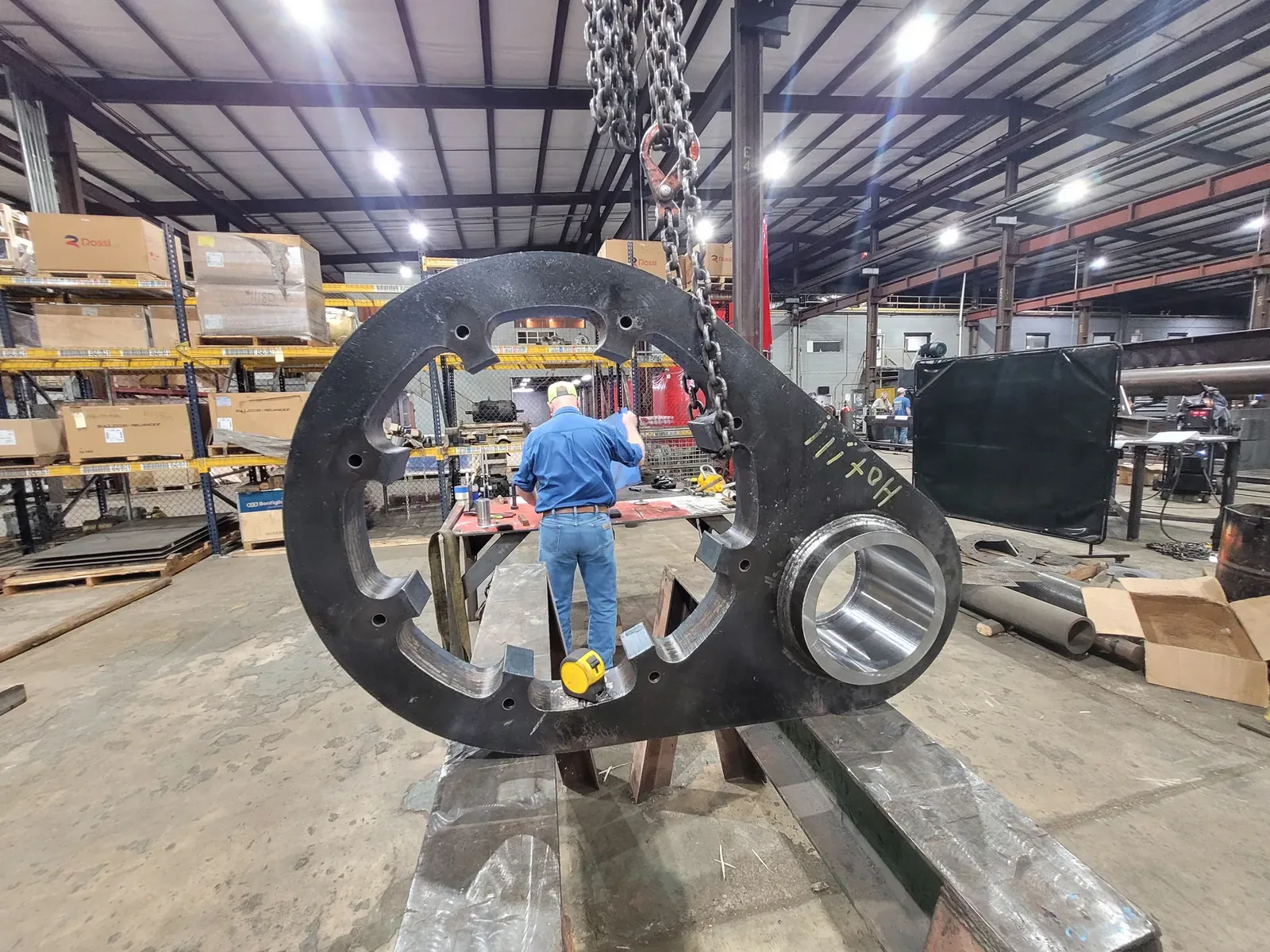
The Coupling in Detail
Talk to FiberPro about your operation
We're heavy-duty, reliable, and responsive — when you call, you speak to a decision-maker.